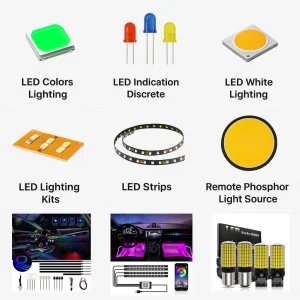

The global industrial and commercial lighting sector is undergoing an unprecedented structural transition. No longer restricted to basic illumination, modern luminaire design demands high integration, intelligent thermal pathways, and robust material durability. This transition has shifted the burden of innovation onto specialized component manufacturers who can produce close-tolerance, high-durability sub-assemblies.
According to current market intelligence, the demand for precision lighting components—spanning metal stamping parts, high-efficiency PCB boards, and optical arrays—is scaling at a CAGR of 8.4%. Driving this growth is the rapid urbanization of developing economies, retrofitting initiatives in mature economies aiming for decarbonization, and the integration of IoT-enabled sensors within public illumination infrastructure.
"The true competitive differentiation in modern solid-state lighting does not reside in the outer housing design alone, but in the thermal dissipation coefficients of the base metal and the architectural reliability of internal PCB modules."
Leveraging deep manufacturing intelligence, Guangzhou Mayumi Auto Co., Ltd. (established in 2011) has adapted its extensive automotive chassis and drivetrain manufacturing precision to specialized lighting components. Utilizing a state-of-the-art 25,000 square meter manufacturing campus and supported by over 280 skilled engineers and operators, the company incorporates automotive-grade quality management metrics (such as FMEA and strict tolerance controls) to build highly durable custom metal stamping assemblies and electronic components for the global architectural and commercial lighting market.
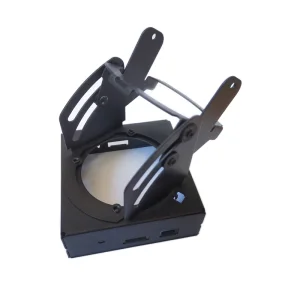
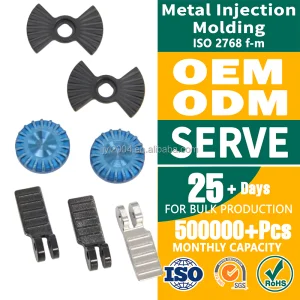
This cross-industry expertise enables the fabrication of carbon steel stamping brackets, high-tensile stainless steel connectors, and custom injection-molded components that meet or exceed standard lighting industry fatigue life demands.
Incorporating high-grade aluminum PCB substrates (DOB configurations) and specialized extruded thermal channels to lower junction temperatures, prolonging diode life beyond L70 50,000-hour limits.
Employing a robust 7-stage quality inspection framework, incorporating machine vision automated defect analysis, optical spectrometer calibration, and environmental chamber cycling.
High-transparency PC (Polycarbonate) plates and engineering-grade ABS bases processed via high-pressure injection molding to resist UV discoloration, chemical corrosion, and mechanical stress.
To implement an effective SEO semantic hierarchy, it is vital to categorize components into distinct functional disciplines. High-performance lighting systems consist of three core architectural elements: the structural chassis, the optoelectronic driver/board assembly, and the secondary optics and control modules.
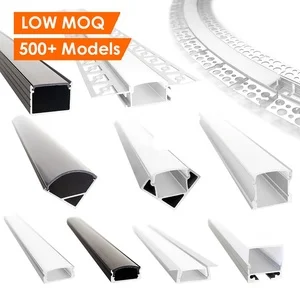
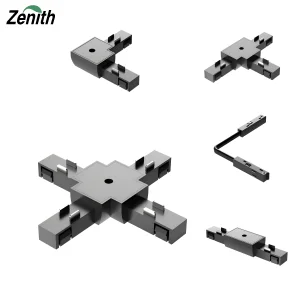
Without an optimally engineered chassis, solid-state lighting system lifespans drop precipitously. Carbon steel stamping parts and stainless steel brackets serve two main goals: mechanical stabilization and grounding. Extruded aluminum profiles, such as corner-fitting channels for LED strips, perform the dual function of structural track mounting and primary heat dissipation.
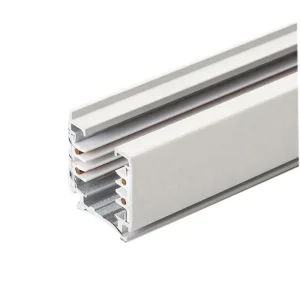
In municipal and industrial retrofitting projects, components like the custom stainless steel mounting hardware and extruded aluminum track systems must withstand prolonged wind load, moisture ingress, and vibration. The mechanical precision achieved in our automotive suspension stamping processes translates directly into lighting fixtures that maintain structural integrity under extreme outdoor stress.
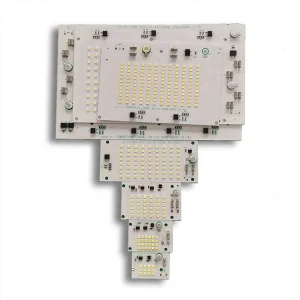
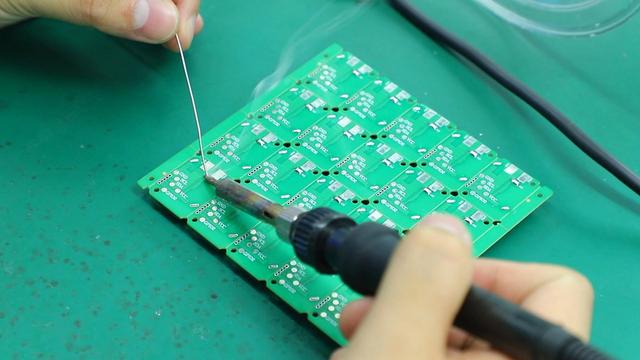
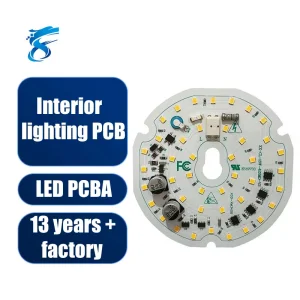
The electronic engine of the modern luminaire is the PCB (Printed Circuit Board). Standard lighting solutions rely heavily on FR4 boards, but high-wattage industrial components demand Metal Core PCBs (MCPCBs). The integration of SMD 2835 or SMD 5050 LED arrays onto aluminum substrates requires high-speed Surface Mount Technology (SMT) with zero-tolerance reflow profiles.
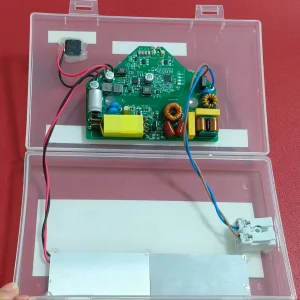
Products like the DOB (Driver-on-Board) Aluminum PCB Boards represent a major technical shift. By placing the driver circuitry and the LED emitters on the same metal-clad board, manufacturers reduce structural thickness, eliminate loose external wiring, and simplify SKD (Semi Knocked Down) kit assembly, leading to significant material savings in global commercial lighting production.
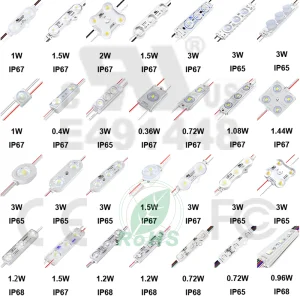
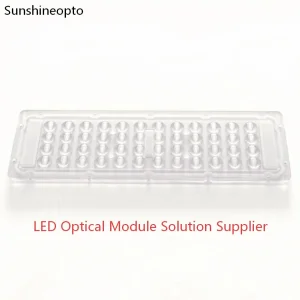
Uncontrolled LED output is uncomfortable and inefficient. High-efficiency lighting components rely on secondary optics to direct luminous flux exactly where it is required. High-transparency PC (Polycarbonate) or PMMA plates featuring integrated 48-in-1 or 64-in-1 lens arrays are widely deployed in outdoor roadway and warehouse luminaires.
These polymeric bases are manufactured using cleanroom injection molding machines to prevent particulate contamination, which could otherwise create microscopic hot spots or focal anomalies. This level of optical precision ensures high uniformity and limits glare in applications ranging from commercial offices to machine vision inspection lines.
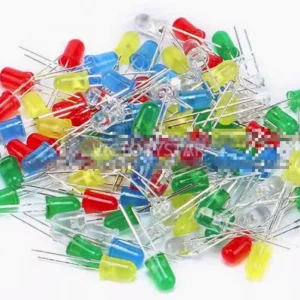
Transitioning from standard SMD architectures to Chip-on-Board (COB) and Chip Scale Package (CSP) technologies. This design reduces thermal resistance, increases packaging density, and allows for ultra-narrow lighting profiles suitable for modern architectures.
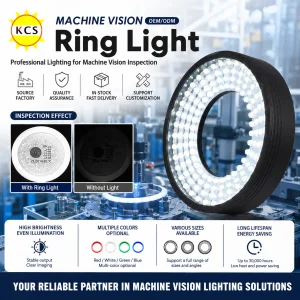
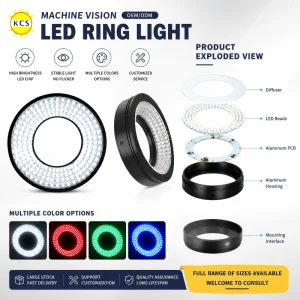
Integrating custom UV (Ultraviolet) and IR (Infrared) emitters into high-uniformity ring lights. These sub-assemblies are critical for factory automation, PCB defect detection, and intelligent sorting systems, representing a major integration of lighting with industrial robotics.
Development of modular "Smart Driver" sub-components that natively support Zigbee, Casambi, and DALI-2 protocols, enabling real-time dimming, CCT tuning, and predictive energy analytics across commercial buildings.
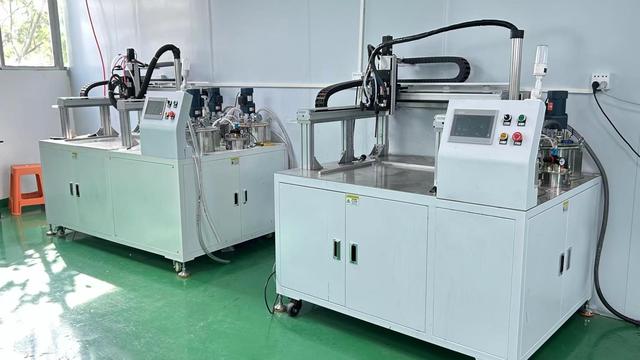
In today's volatile regulatory environment, European and North American buyers face strict compliance demands under CE, UL, RoHS, and Energy Star frameworks. Securing components from a manufacturer with an integrated quality management structure minimizes technical and regulatory risk.
Guangzhou Mayumi Auto Co., Ltd. applies its specialized logistics capabilities, honed through years of shipping precision auto components to North America, Europe, South America, the Middle East, and Southeast Asia, to the lighting sector. By utilizing raw materials with full chemical traceability, certifying plastic bases to meet specific flammability ratings (such as UL94 V-0), and ensuring PCBs pass strict dielectric strength and insulation resistance tests, we protect our clients' supply chains against customs and quality complications.
Whether you require semi-assembled kits (SKD) to minimize localized tariffs or fully tested sub-components, our engineering team offers design-for-manufacturability (DFM) reviews to lower production costs and increase system efficiency.
Outdoor applications require high resistance to UV degradation and corrosion. We recommend structural components made of hot-dip galvanized carbon steel or 304/316 stainless steel combined with high-grade Polycarbonate (PC) diffusers that exhibit over 89% light transmittance and certified UV stability. MCPCBs (Metal Core PCBs) are necessary to quickly transfer heat to the secondary aluminum sink.
DOB systems eliminate the need for standard electrolytic capacitor drivers, which are often the primary point of failure in solid-state luminaires. By incorporating solid-state ICs directly onto the PCB, you reduce system volume and manufacturing costs. However, effective thermal layout and high-grade thermal interface materials are required to protect the LEDs from heat generated by the drive circuitry.
Unlike general illumination, machine vision systems require high uniformity and specific wavelengths (such as UV or IR) to illuminate micro-imperfections on surfaces like PCBs. Advanced 24V ring lights eliminate visual flicker, providing stable illumination for high-speed industrial inspection cameras.
Yes, our plant handles complete OEM and ODM design cycles. We work with standard CAD, STEP, and IGES formats. We design custom tooling, run DFM simulations, and create working prototypes before moving to full-scale production.
 Mayumi Auto